Your car looks fine sitting in the driveway right now. Give it two Missouri summers, one bad hail season, and a winter’s worth of road salt, and that story changes fast. St. Louis sits at one of the most punishing intersections of weather patterns in the country, and your vehicle’s paint is taking the hit whether you notice it yet or not.
This isn’t about vanity. Deteriorating paint exposes bare metal, invites rust, and chips away at resale value. The good news: most of the damage is predictable, and predictable damage is preventable. Here’s what’s actually happening to your car’s finish out there, and what you should do about it.
Missouri’s Hail Problem Is Getting Worse, Fast
If you’ve owned a car in St. Louis for more than a few years, you’ve probably flinched at the sound of a spring storm. That instinct is well-founded. Missouri saw the most significant increase in major hail events of any state in the country, a 182% rise between 2022 and 2024, according to an Insurify analysis of NOAA and FEMA National Risk Index data, which also identified St. Louis as Missouri’s most at-risk city.
That’s not a rounding error. Nearly tripling your hail exposure in two years means the old logic of “park outside and hope for the best” just doesn’t hold anymore.
Hail damage ranges from barely-there dings that only catch light at the right angle, to full panel dents that compress and crack the paint layer. The sneaky part? Small dents often go unrepaired because they seem cosmetic. But once paint cracks, moisture gets under it. Moisture plus bare steel equals rust. And rust spreads quietly.
Your best moves before storm season: get a garage or covered carport if at all possible, even a temporary one. If you can’t, a thick car cover rated for hail is a real option. After any significant storm, walk the car in good light and run your palm across horizontal surfaces. The hood, roof, and trunk lid take the worst of it.
The “Paint Threat Stack”: Four Forces Working Against You in St. Louis
St. Louis doesn’t throw one threat at your car’s finish. It throws four, and they layer on top of each other across the calendar year. Think of it as a stack:
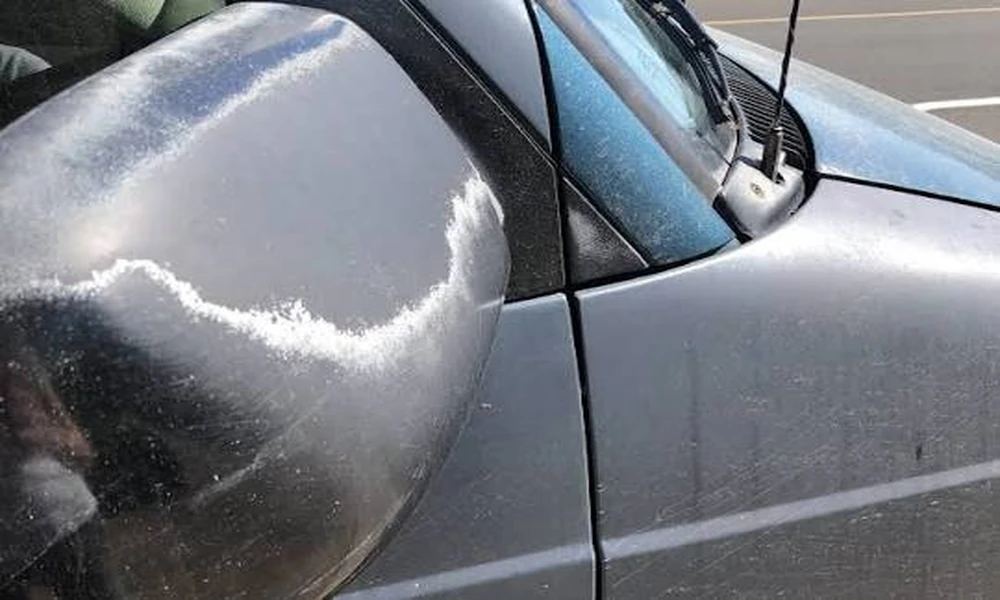
- UV radiation (April through September). Missouri summers are intense. The sun’s ultraviolet rays degrade the molecular bonds in your car’s clear coat, the transparent layer sitting above the base color. Once that clear coat weakens, pigments oxidize and the finish goes from vibrant to chalky. Darker colors – deep black, navy, and dark red – absorb more heat and fade faster.
- Thermal cycling (year-round, worst in spring and fall). St. Louis is famous for 40-degree temperature swings inside a single week. Paint and the metal underneath expand and contract at different rates. Over hundreds of cycles, that creates micro-fractures in the clear coat you can’t see until they’ve multiplied into something visible.
- Road salt (November through March). MoDOT treats roads heavily during ice events, and brine gets sprayed up into every panel gap, wheel well, and undercarriage seam your car has. Salt accelerates rust at the edges of any existing paint chip, which is why small chips from summer gravel become rust bubbles by spring.
- Tree sap and bird droppings (spring through fall). Both are acidic. Left on paint for more than a few days in summer heat, they etch through the clear coat. This is the one people underestimate most, and it’s the easiest to address with a prompt wash.
No other major city in the country stacks all four of these threats as reliably as St. Louis does. Understanding the stack tells you when to act, not just what to do.
Why Older Cars Feel the Pressure More
The average American car on the road right now isn’t new. The average age of vehicles in the US reached 12.8 years in 2025, according to new analysis from S&P Global Mobility, as reported by UPI. A 12-plus-year-old car has already gone through a decade of UV cycling, temperature stress, and seasonal road salt. Its clear coat is thinner. Its paint chips have had years to start rusting at the edges. Its color, if it’s a dark shade, may already look a little off compared to the day it rolled off the lot.
That doesn’t mean older vehicles are hopeless. It means they need more attention, not less. A thorough paint correction, a fresh coat of quality wax or a ceramic sealant, and prompt chip repair can extend a finish for years. The mistake most owners make is waiting until the damage looks bad. By then, surface-level fixes won’t cut it.
“With average age growth, more vehicles are entering the prime range for aftermarket service, typically from 6 to 14 years of age.” – Todd Campau, Aftermarket Practice Lead, S&P Global Mobility
That’s the window where consistent paint care pays its biggest dividends. Ignore it and you’re looking at panel repaints, not polishing sessions.
When DIY Care Ends and Professional Repair Begins
Here’s a simple framework for deciding what you can handle at home versus what needs a shop.
| Damage Type | DIY Viable? | Why |
|---|---|---|
| Light surface oxidation (chalky look) | Yes | A quality cutting compound and polish can restore most of it if the clear coat is intact |
| Minor clear coat scratches | Sometimes | Depends on depth; light ones polish out, deep ones don’t |
| Paint chips down to primer or metal | Temporary only | Touch-up paint stops moisture but won’t match color or prevent edge rust long-term |
| Hail dents | No | Requires paintless dent repair (PDR) tools and trained hands; DIY attempts often crack surrounding paint |
| Rust bubbling under paint | No | The rust must be fully removed and the panel properly primed before repainting |
| Clear coat failure (peeling) | No | Once the clear coat peels, the entire panel needs to be repainted by a professional |
If your car falls into the bottom three rows of that table, the cost of waiting almost always exceeds the cost of acting now. Rust spreads. Peeling clear coat accelerates pigment loss underneath. What costs a panel repaint today becomes a full-vehicle repaint if you let it sit.
For St. Louis drivers dealing with hail dents, rust edges, or clear coat failure from years of summer UV exposure, finding a shop certified to handle structural and cosmetic repairs correctly matters. Working with shops that carry OEM certifications ensures that manufacturer repair standards are followed, which protects both the repair quality and your vehicle’s long-term value. Drivers looking for auto body repairs in St. Louis should verify that any shop they consider holds certifications relevant to their specific vehicle make, not just a general shop license.
The auto body field itself reflects how much expertise this work demands. According to the U.S. Bureau of Labor Statistics, there were 193,000 automotive body and glass repairer jobs in the US as of 2024, with a median annual wage of $50,680 – a skilled trade that reflects years of hands-on training, not something you pick up from a YouTube tutorial.
Your Seasonal Paint Protection Checklist for St. Louis
This is what a proactive schedule looks like for a car kept in the St. Louis metro:
- March: Full wash to remove road salt buildup, including undercarriage rinse. Inspect all panels for chips that rusted over winter. Address them before heat season starts.
- April: Apply a fresh coat of wax or top up a ceramic sealant before UV intensity peaks. Check the clear coat on horizontal surfaces (hood, roof, trunk) for early oxidation.
- May through August: Wash the car every one to two weeks. Remove bird droppings and tree sap the same day if possible. Park in shade or a garage during peak afternoon hours when you have the choice.
- September: Post-summer inspection. If the clear coat shows hazing or early peeling, schedule a professional assessment before cold weather locks in.
- November: Apply a pre-winter wax layer specifically over any repaired chips to seal them against salt exposure. Consider a paint sealant rated for winter conditions if you park outside regularly.
Consistent, low-effort maintenance beats expensive catch-up repairs every time. The window between “this needs a polish” and “this needs a full repaint” is shorter than most people think, especially in a city with St. Louis weather patterns.
Your car’s finish is one of the few things that signals quality and value at a glance. Keep it that way.