Repairing a road while it remains open to traffic is one of the more hazardous tasks in construction. Workers operate just metres from moving vehicles, while drivers, cyclists and pedestrians must navigate lane closures and diversions they may not expect. That said, for contractors carrying out road repair in Singapore, temporary traffic management is usually planned in line with guidelines issued by the Land Transport Authority and other relevant agencies. Whatever the location, a clear and consistent setup helps protect both the work crew and the public.
Planning the Traffic Management Scheme
Every job should start with a plan that matches the road conditions and the type of work involved. When preparing the scheme, teams typically consider factors like these:
- The speed limit, traffic volume and type of road affected.
- How long the works will last and whether they will run overnight.
- The number of lanes that need to be closed and the space required for workers and machinery.
- Nearby junctions, bus stops, driveways and pedestrian crossings.
- Approvals or permits needed before work can begin.
Setting Up Advance Warning
Drivers need enough notice to slow down and change lanes safely before reaching the work zone. Well-placed signs form the first layer of protection, and advance warning arrangements usually include the following:
- “Road works ahead” signs placed at distances suited to the speed of traffic.
- Lane closure and merge signs that show drivers which lane to use.
- Reduced speed limit signs where temporary limits apply.
- Variable message signs on busier roads to give real-time information.
- Flashing lights or arrow boards to draw attention at night or in poor weather.
Closing Lanes and Guiding Traffic
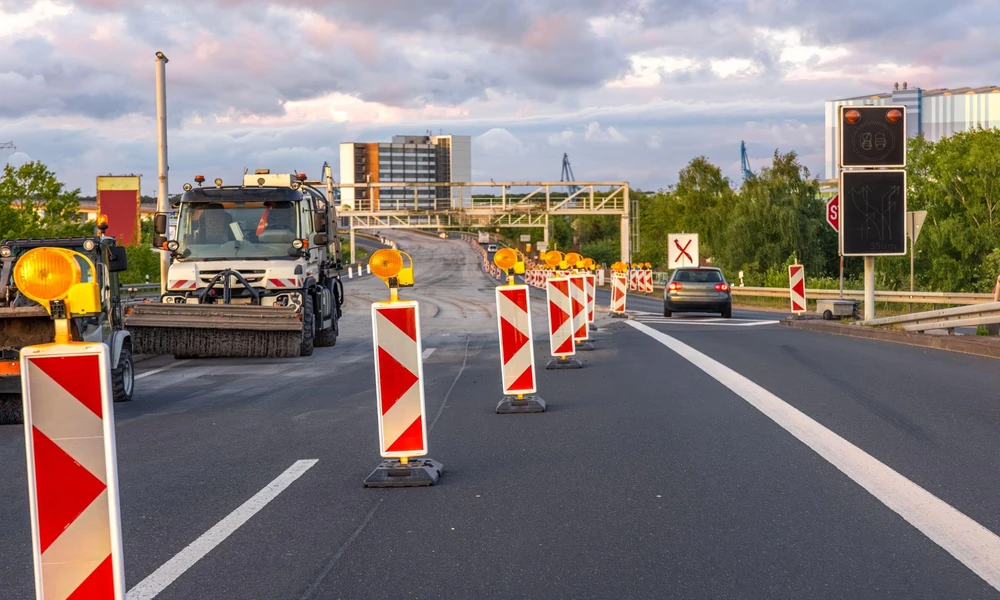
Once drivers reach the work area, cones, barriers and further road traffic signage guide them safely past it. A typical setup includes elements such as these:
- A taper of cones that gradually moves traffic out of the closed lane.
- A buffer zone between the taper and the work area to give drivers room to react.
- Barriers or water-filled blocks where higher protection is needed.
- Delineators and reflective markers to keep the travel path clear.
Using Diversions and Traffic Controllers
Some works require full road closures or alternating one-way traffic. Clear directions become even more important when drivers must follow an unfamiliar route, and teams may rely on measures like these:
- Signposted diversion routes that direct traffic onto suitable alternative roads.
- Trained traffic controllers or flagmen using stop-go signs.
- Temporary traffic lights for longer periods of one-way working.
- Coordination with bus operators where services must be rerouted.
- Advance notices to residents and businesses along the affected route.
Protecting Pedestrians and Cyclists
Road works often affect footpaths and cycling lanes as well as vehicle lanes. To keep these users safe, teams can take steps such as these:
- Providing temporary walkways separated from traffic by barriers.
- Keeping routes accessible for wheelchair users and people with prams.
- Placing signs that warn cyclists of narrowed lanes or detours.
- Lighting pedestrian routes during night works.
- Keeping crossings open or providing marked temporary alternatives.
Monitoring and Removing the Setup
Traffic management needs regular attention throughout the job, not just during installation. Good practice usually involves the following:
- Inspecting signs, cones and barriers at the start of each shift and after bad weather.
- Replacing knocked-over or damaged equipment promptly.
- Adjusting the layout as work progresses to different sections of the road.
- Removing equipment in the reverse order of installation once work is complete.
Keeping Roads Safe While Repairs Are Underway
Temporary traffic management is about giving everyone on the road clear information and enough space. Careful planning, visible signage, regular checks and attention to all road users can help repair works proceed with fewer incidents and less disruption to daily travel.
Request a quote to United E&P to ensure you get proper manpower on your next road repair project.