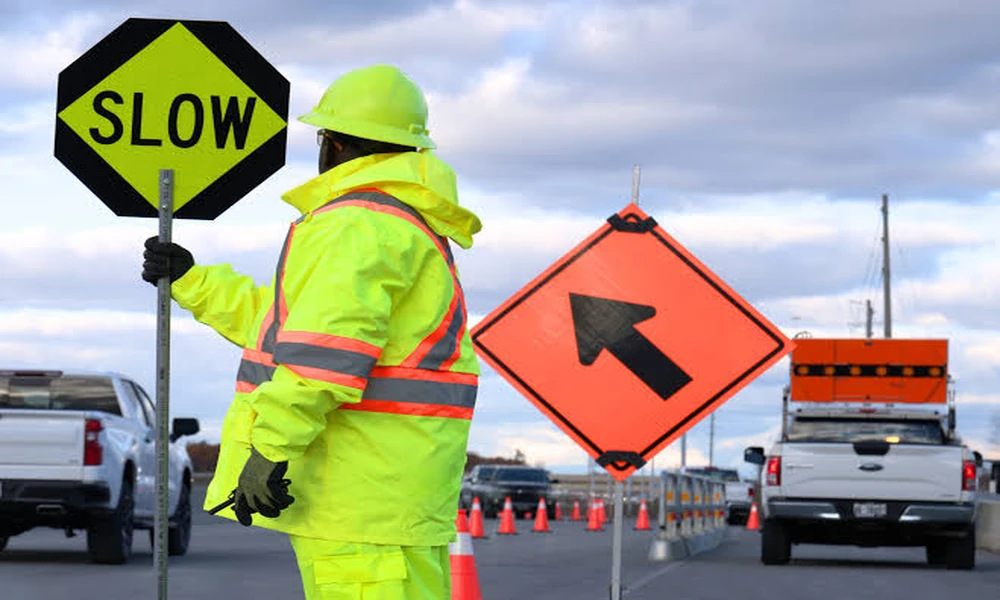
Orange cones and flashing signs might seem like a routine part of Ontario’s roadways, but behind every lane closure and detour lies a complex history of regulation, innovation, and a relentless focus on safety. Traffic control operations have quietly evolved, shaping the way workers, drivers, and entire communities navigate changing infrastructure.
Origins of Traffic Control and Safety Compliance in Ontario
The earliest days of traffic management in Ontario were marked by little more than simple signage and the good judgment of workers on the road. Municipalities set their own rules, resulting in a patchwork of standards that left much to interpretation. As traffic volumes swelled in the mid-20th century, so did the risks. Serious incidents highlighted the gaps, sparking a shift in public expectation.
Provincial and municipal authorities began stepping in with more formalized requirements. The introduction of the first standardized regulations, basic as they were, signaled that safety needed to be more than just common sense. Over time, these efforts coalesced into a shared commitment: protecting both workers and the traveling public.
Development of Ontario Traffic Manual Book 7
With booming construction and complex infrastructure projects, Ontario needed a single, authoritative reference for traffic control. Enter the Ontario Traffic Manual Book 7 (OTM Book 7), a document that established clear, province-wide standards for signage, lane closures, flagging procedures, and the use of safety equipment.
OTM Book 7 was more than a manual; it was a blueprint for harmonizing practices across regions. It spelled out when to use certain signs, how to stage closures, and the minimum requirements to keep sites safe, raising the bar for every project, from single-lane repairs to major highway overhauls. As the manual was updated, compliance requirements became stricter, with new provisions for site-specific plans and documentation.
Integration of Occupational Health and Safety Act (OHSA)
Compliance in traffic control was no longer just about road signs; it was about worker protection. The Occupational Health and Safety Act (OHSA) added another layer, requiring that traffic management plans align with broader workplace safety standards. This meant formalized training, rigorous certification, and daily risk assessments as the new normal.
Crews were now expected to recognize hazards unique to each site, document their safety measures, and undergo regular inspections. Enforcement became more consistent, as inspectors checked not only for OTM Book 7 adherence but also compliance with OHSA protocols. The result? Safer worksites with lower incident rates and a culture where best practices are non-negotiable.
Advances in Traffic Control Technology and Operations
Technology has transformed the field from static signs to dynamic, real-time solutions. Modern fleets are equipped with digital message boards, intelligent traffic monitoring, and GPS-tracked equipment. These innovations have slashed response times for emergencies and made it possible to adapt to changing conditions within minutes, not hours.
Digital traffic planning tools allow for detailed simulations of lane closures and detours, reducing surprises on the ground. The payoff is not just operational efficiency but measurable impacts on worker and public safety, with fewer incidents and greater compliance at every stage.
Salus Traffic Solutions: A Case Study in Compliance and Innovation
Ontario has no shortage of traffic management providers, but some have set themselves apart by fully embracing the challenges of compliance and innovation. Salus Traffic Solutions exemplifies how a strong safety culture, modern equipment, and project management expertise can deliver consistent results across diverse and complex environments.
Dedicated to full compliance with OTM Book 7 and OHSA, Salus implements daily safety-focused operations, site-specific hazard awareness, and robust project supervision. Their province-wide coverage and end-to-end services, from planning to pavement marking, demonstrate how integrated approaches are reshaping industry benchmarks.
Current Challenges and Trends in Ontario’s Traffic Control
As urban infrastructure grows denser and more intricate, the demand for expert traffic management surges. New transit lines, utility upgrades, and road expansions require nuanced approaches to minimize disruption without sacrificing safety. Emergency response has become a round-the-clock priority, with teams mobilizing at all hours to restore order after accidents or storms.
Adapting to ongoing municipal and provincial regulatory updates keeps traffic control providers on their toes. Rapid urbanization and changing public expectations mean standards are never static, and companies must remain agile in both interpretation and execution.
The Future of Traffic Safety Compliance in Ontario
Looking forward, emerging technologies such as automated flagging devices, smart cones, and AI-driven traffic analysis promise to further reduce risks for workers and drivers alike. The push toward standardized, province-wide certification and more advanced training will ensure that crews are prepared for whatever the road ahead brings.
Collaboration among government, industry, and innovators is set to define the next era of traffic safety. As Ontario continues to build and rebuild, only those who stay ahead of the curve in compliance and safety will truly keep the province moving.