

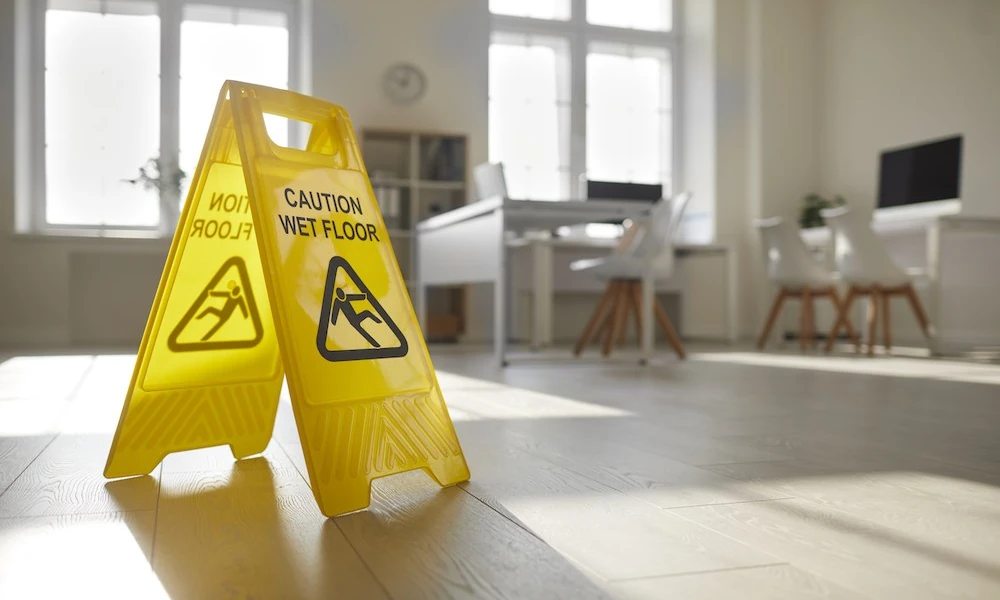
Nobody plans to fall on a wet grocery aisle on a Tuesday afternoon. It happens between two errands, and by the time you stand up, the store has already sent someone with a mop. That mop is the problem. The second it touches the floor, your strongest piece of evidence starts disappearing.
Here is what most people get wrong about a Texas slip and fall case: they think it’s about the fall. It isn’t. It’s about what the property owner knew, when they knew it, and whether they had a reasonable chance to fix it before you walked through. Proving that takes documents, footage, and a timeline built fast, ideally before anyone has a chance to tidy up the scene.
This piece breaks down the evidence that actually moves a premises case in East Texas, who controls it, and what you can realistically collect yourself in the first few days. You’ll get a practical checklist you can run through whether you’re a store manager trying to understand your exposure or someone who just got hurt and doesn’t know where to start.
Why Texas Slip and Fall Cases Are Won or Lost in the First Week
Texas law puts a specific burden on injured people in premises cases. You generally have to show the owner knew or should have known about the dangerous condition, and that they failed to act. That’s not a small hurdle. A slick floor isn’t automatically negligence. A slick floor that sat there for three hours while employees walked past it is a very different story.
The evidence that proves the difference is perishable. Security footage gets overwritten on a loop, sometimes within days. Cleaning logs get filled in retroactively. An employee who saw the spill clock out, moves on, and by next month remembers nothing.
I’ve watched enough of these files to say this plainly: the person who preserves evidence first usually controls the narrative. That’s true whether you’re the claimant or the business. If you’re a store owner reading this to understand your own risk, the same principle applies to you in reverse. Good documentation protects you too.
What Actually Counts as Evidence in a Premises Case
People assume the case hinges on their injury. It doesn’t, and that’s where a lot of claims go sideways. The injury establishes damages. The evidence establishes fault. You need both, and they come from different places.
Think of it as four buckets:
- Condition evidence: what the hazard was, how big it was, how long it existed.
- Notice evidence: what the owner knew, when they knew it, and how they normally handle that type of hazard.
- Scene evidence: photos, measurements, lighting, signage, and any warning cones or lack of them.
- Witness evidence: employees, other customers, and anyone who saw the floor before you did.
Notice evidence is the one that decides cases. Everything else supports it. Most disputes in a deposition come down to a single question asked five different ways: how long was it there?
The Paper Trail You Should Ask For Immediately
Businesses generate more records than most people realize, and those records are usually the fastest way to pin down a timeline. If you’re handling your own claim, or if you’re a manager reviewing an incident, these are the documents that matter.
Request them in writing, and keep proof that you asked. Under Texas rules, evidence that’s destroyed after a dispute arises can create serious problems for the party that destroyed it, and courts in this state have not been gentle about that. The Texas courts system publishes its rules of civil procedure, including the provisions on discovery and evidence preservation, and it’s worth skimming if you want to understand why a timely written request carries weight.
The list:
- Sweeping, mopping, and inspection logs for the day before and the day of.
- Incident reports, including the one filed internally that you never saw.
- Employee schedules, so you know who was on the floor and when.
- Maintenance requests for the area, especially anything about leaks or drainage.
- Camera footage from every angle covering the spot, not just the closest camera.
- Any prior incident reports for the same location going back a couple of years.
That last one is underrated. A single spill is an accident. Four spills in the same spot over eighteen months is a pattern, and patterns suggest the owner knew the area was a problem and did nothing structural about it.
Do This Within the First 72 Hours
You don’t need a law degree to lock down the basics. You need a phone, a notebook, and some speed.
Start with photographs, and take more than feels reasonable. Shoot the hazard from close up and from where you were standing when you went down. Capture the lighting. Capture any signage. Capture the shoes you were wearing, because footwear arguments come up more often than people expect.
Write down what happened while it’s fresh, in plain language, with times. Memory degrades fast and details you’re certain about today get fuzzy in a month. Note who helped you, who spoke to you, and whether anyone said anything about the floor being wet before you arrived. That offhand comment from an employee is often the single most valuable sentence in the whole case.
Get medical attention and keep the records. You don’t have to guess at severity, and you shouldn’t try. A physician documents what you can’t.
Then, if the injury is more than a bruise, get a professional read on the file. This is where people who want to handle it alone tend to stall, and it’s the point where finding a top-rated injury lawyer in Tyler, Texas, early tends to change the outcome, because the preservation letters need to go out before the footage loop wipes itself. Waiting three months to make that call is one of the most common and most expensive mistakes in these claims.
If you’re on the other side of this, a business owner or risk manager, the same window applies. Collect your logs, pull your footage, and write an honest incident report. Filling in a cleaning log after the fact is the kind of thing that turns a defensible case into an indefensible one.
Where Most Claims Fall Apart
Three failure points show up again and again.
The first is notice. If you can’t show how long the hazard existed, you’re stuck arguing that the owner should have known, which is a much weaker position. The second is the constructive notice trap: no one saw the spill, so there’s no direct proof it sat there, which pushes everything onto circumstantial evidence like how the liquid looked or whether it had started to dry at the edges.
The third is footwear and distraction. Defense attorneys look hard at what you were doing. On a phone, in a hurry, in worn soles. None of that erases the owner’s duty, but it does give a jury something to weigh, and it’s better to know that going in than to be surprised by it in a deposition.
One more thing worth knowing if your fall happened at work in an industrial or warehouse setting. The Consumer Product Safety Commission tracks fall related hazards and publishes safety guidance for a range of environments, and that material is useful context when you’re trying to show that a hazard was foreseeable rather than random.
Building Your Own Evidence File
Here’s a simple framework I use when I think through a premises file. Call it the Four Question Test. Answer each one with a document, not a feeling.
- What was the condition? Photo, sample, witness description.
- How long was it there? Log, footage timestamp, employee statement.
- What should the owner have done? Policy manual, industry standard, prior incidents.
- What did it cost you? Medical bills, missed shifts, out of pocket expenses.
If you can answer all four with something on paper, you have a file. If you can only answer one or two, you have a story, and stories don’t move insurance adjusters.
Keep everything in one place. Scan receipts. Save the emails. Back up the photos somewhere that isn’t your phone.
What This Comes Down To
Slip and fall claims aren’t won by the most sympathetic plaintiff. They’re won by the best documented timeline, and Texas gives you a limited window to build it. The floor gets cleaned, the footage gets recycled, and the people who saw it move on with their week.
So the real question isn’t whether you have a case. It’s whether the evidence still exists by the time anyone asks. If the answer might be no, that’s your signal to stop reading and start collecting. What’s the first thing you’d photograph right now?

